

The short answer
Check the exact panel manufacturer's cleaning instructions first. Many modules can be cleaned with suitable water and a clean, soft, non-abrasive tool; some manufacturers permit a mild cleaner in specific circumstances, while others set stricter water and product limits. Do not assume household soap, abrasive pads or an exposed pressure jet are safe for every array.
Key takeaways
- Start with the module manual and installer advice, not a universal DIY recipe.
- Use only a clean, soft, non-abrasive tool that the manufacturer permits.
- Soap or chemicals should be used only when the panel maker allows the particular product and method.
- Roof access and live electrical equipment can make a professional clean the safer choice.
Is plain water enough?
For light loose dust, appropriate water may be enough. Bird droppings, sticky pollen, coastal film and greasy deposits can need gentle agitation or a manufacturer-approved cleaning agent. Water quality also matters: some module manuals specify limits for hardness and pH and recommend soft water to reduce residue. Do not use a very cold rinse on hot panels; follow the maker's temperature guidance.
Can I use dish soap or solar-panel cleaning chemicals?
There is no universal 'best soap' for all panels. Some manuals allow a mild detergent or an environmentally friendly cleaner for stubborn grease, with restrictions; others differ by module. Strong acids, alkalis, solvents and abrasive powders are poor defaults. Check the exact model's manual and warranty before using any product, and never mix chemicals or let runoff reach sensitive roof finishes or gardens without planning.
What brush or cloth is suitable?
A clean, soft, non-abrasive cloth, sponge or purpose-made non-conductive brush may be permitted. Dirt trapped in a brush can scratch glass, so rinse the tool and do not scrub dry grit across the surface. Do not use metal scrapers, hard bristles or household scouring pads. A long pole may reduce roof movement, but it does not remove electrical or fall risks.
Should I use a pressure washer?
Do not aim an exposed high-pressure jet at the glass, seals, frames, connectors or cabling. Some panel manufacturers publish controlled-water pressure limits, but those limits differ, and a domestic pressure-washer setting is not a substitute for reading the manual. Sunflow uses a pressure-washer unit only to feed controlled water through a purpose-built Kärcher solar-cleaning lance and soft brush, not to blast the modules.
When is DIY the wrong choice?
Do not climb onto a roof, step on modules or work around damaged cables, loose panels or unsafe access. If there is a suspected electrical fault, damaged glass, loose mounting or persistent low output after cleaning, contact the installer or a qualified solar professional. Cleaning cannot repair an inverter or guarantee a particular increase in generation.
What should you send for a photo-based quote?
Send your suburb, approximate panel count and photos showing the array, roof pitch and build-up from a safe position. Sunflow starts at R1,750 for up to 8 panels and confirms what is included and the price before booking. The Sunningdale project on this site shows our real equipment and work in progress.
See a real solar-panel clean in Tokai
These genuine Sunflow photographs show the same photovoltaic array before and after cleaning. The photos illustrate a cleaning result, not a promise of a particular energy-output gain.
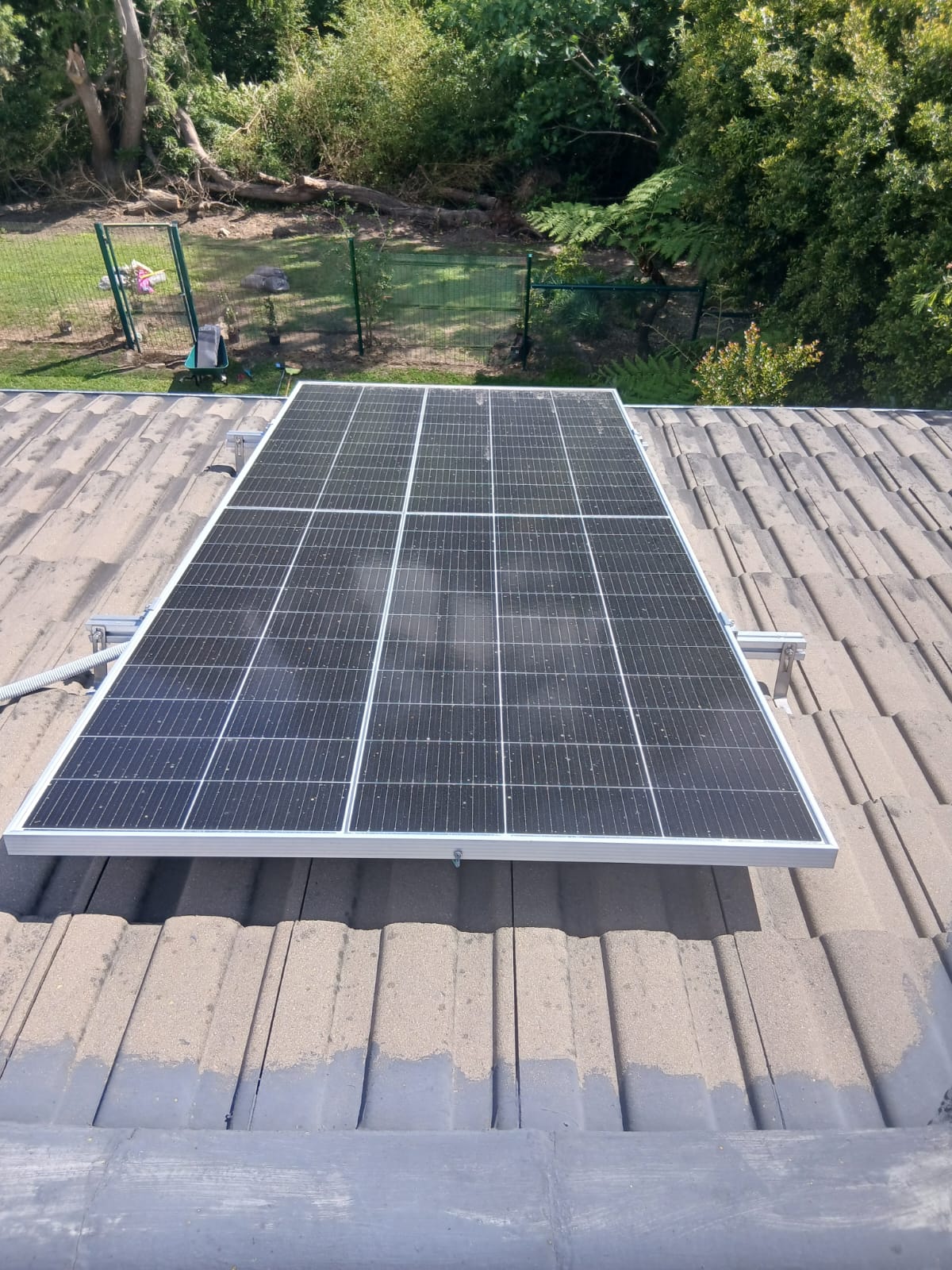 Before
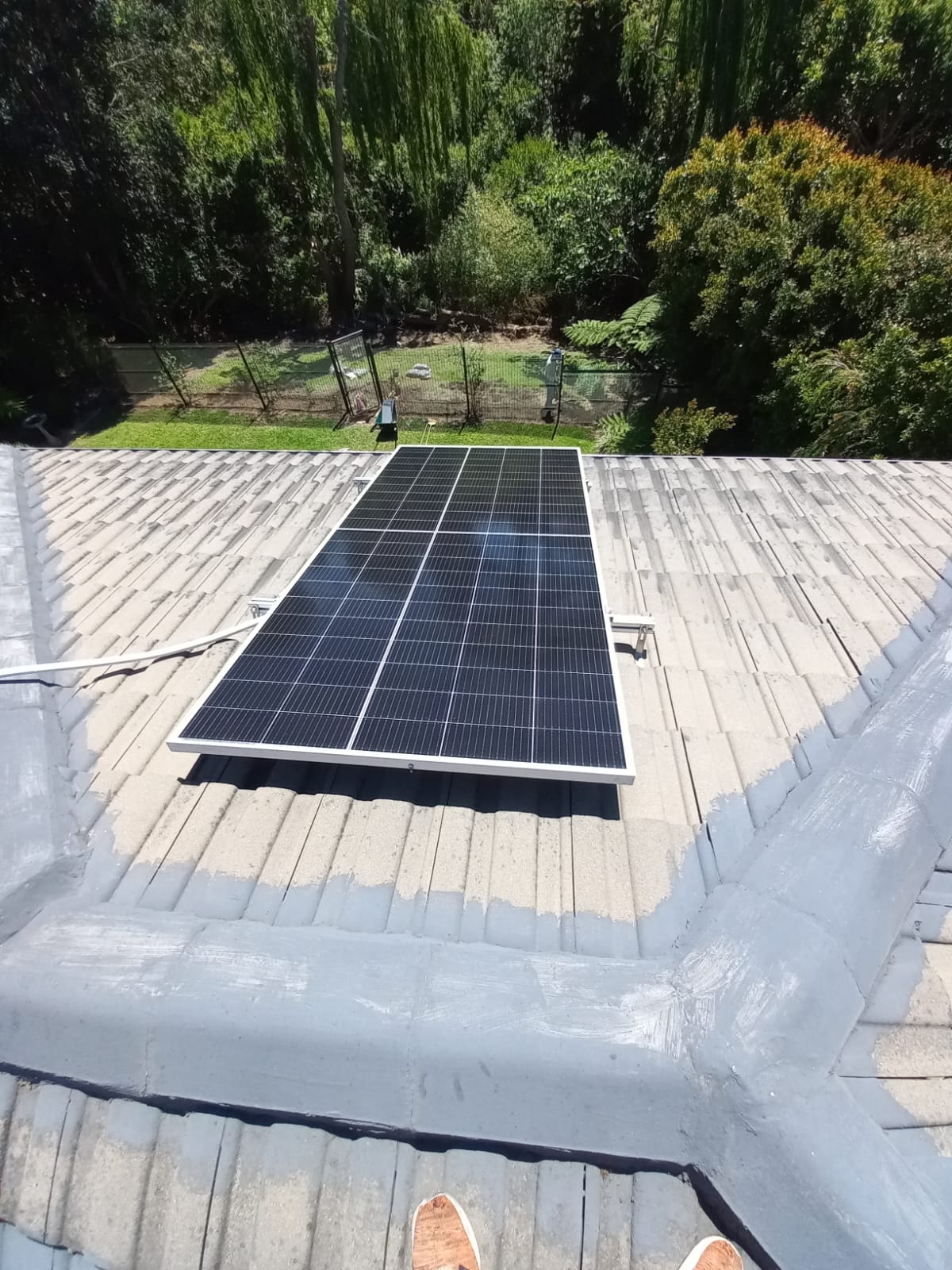 After
See the complete Tokai project, including the separately agreed solar-geyser cleaning →
Sources and further reading
How Sunflow can help
Send safe-to-take roof photos, your panel count and suburb. We can check the array layout and give you a clear cleaning price.
Get a professional solar-panel cleaning quote →
WhatsApp photos for a professional solar-panel cleaning quote →
Read about professional solar-panel cleaning →