
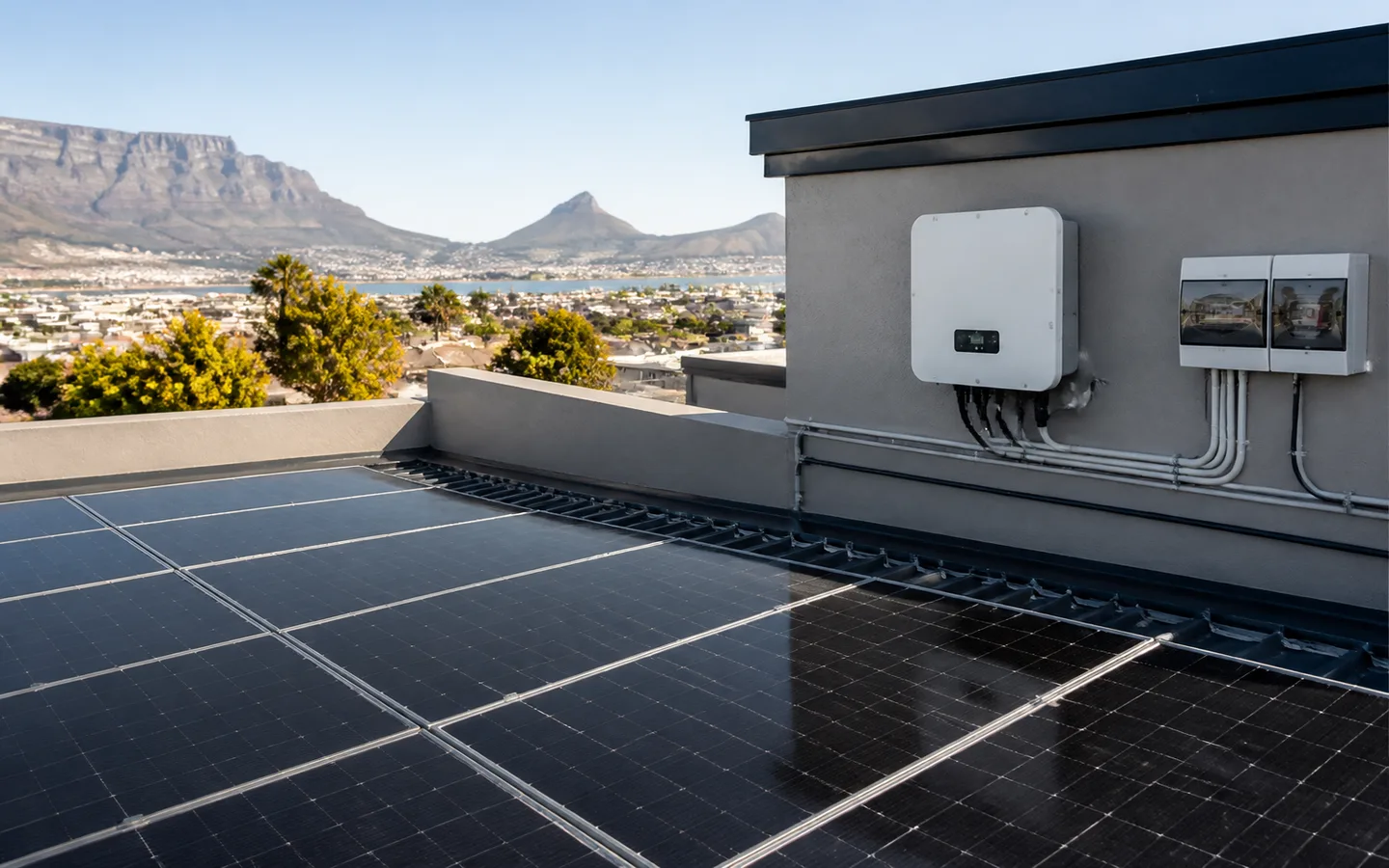
The short answer
Solar panels can be physically cleaned in daylight, but daylight also means the modules may be generating direct-current electricity. Switching off an inverter or the building's AC supply does not automatically make every rooftop cable and connector de-energised. Cleaning should therefore be planned as work around electrical equipment, using the installation's specific shutdown guidance and stopping when damage or an electrical fault is visible.
Key takeaways
- PV modules can continue producing DC voltage whenever light reaches them.
- An inverter or AC shutdown does not guarantee that every rooftop conductor is de-energised.
- The manufacturer and installer procedure for the specific system takes priority over generic advice.
- Cracked glass, exposed cabling, damaged connectors, scorch marks or active fault warnings should pause cleaning.
What 'still generating' means on the roof
A photovoltaic module begins producing electrical energy when light reaches its cells. The electricity between the modules and inverter is direct current, and it can remain present on a conventional array during daylight even when the inverter or main AC supply has been switched off. That is why a solar roof should never be treated as ordinary glazing or assumed safe because a screen has gone dark.
Does switching off the inverter make the array safe?
Not on every system. Shutdown behaviour depends on the modules, inverter, optimisers, rapid-shutdown equipment and the way the installation was designed. Some compatible systems can reduce module-level voltage after a verified shutdown, while traditional string systems may leave elevated DC voltage on rooftop conductors in daylight. Owners should use the procedure supplied for their installation and ask the installer or a qualified solar electrical professional when the procedure is unclear.
How a professional cleaning visit should be planned
Useful information starts with the inverter and module make, panel count, number of storeys, recent fault messages and clear photographs of the array and access route. The cleaning plan should then respect roof condition, weather, cabling, frames and manufacturer restrictions. Sunflow feeds controlled water through a purpose-built Kärcher solar-cleaning lance and non-abrasive brush; an exposed high-pressure jet is not aimed at the glass and panels are not walked on.
When cleaning should stop before it starts
Cleaning is not the right first step when panels have cracked glass, loose or exposed cables, damaged connectors, scorch marks, signs of arcing, visible water entry into electrical components or unexplained active system faults. These conditions need assessment by the installer or an appropriately qualified solar electrical professional. Surface cleaning does not diagnose, isolate, repair or recommission an electrical installation.
Should you turn the inverter off before a visit?
Do not change system settings simply because a generic online checklist says to do so. Follow the shutdown and restart instructions for your installation, or ask the installer for them. We may ask for system details before the visit, while installation-specific electrical decisions stay with the owner, installer or qualified electrical professional.
What Cape Town conditions change—and what they do not
Cape Town dust, coastal salt film, pollen and bird droppings can make surface cleaning worthwhile, especially after long dry periods. Those conditions do not override electrical or access precautions. A visibly dirty panel is not an emergency that justifies working around damaged components, climbing onto an unsafe roof or using uncontrolled water near electrical equipment.
How Sunflow can help
Sunflow provides professional panel cleaning for single- and double-storey properties, Monday to Friday from 07:00 to 17:00 and Saturday from 09:00 to 17:00. We focus on careful surface cleaning; an installer or electrician should handle faults, repairs and panel removal.
Sources and further reading
How Sunflow can help
Sunflow helps Cape Town homeowners and property managers keep solar panels, gutters, roofs, paving and exterior walls clean and well maintained. Send us a few photos and we’ll recommend the right next step.
Read about professional solar-panel cleaning →