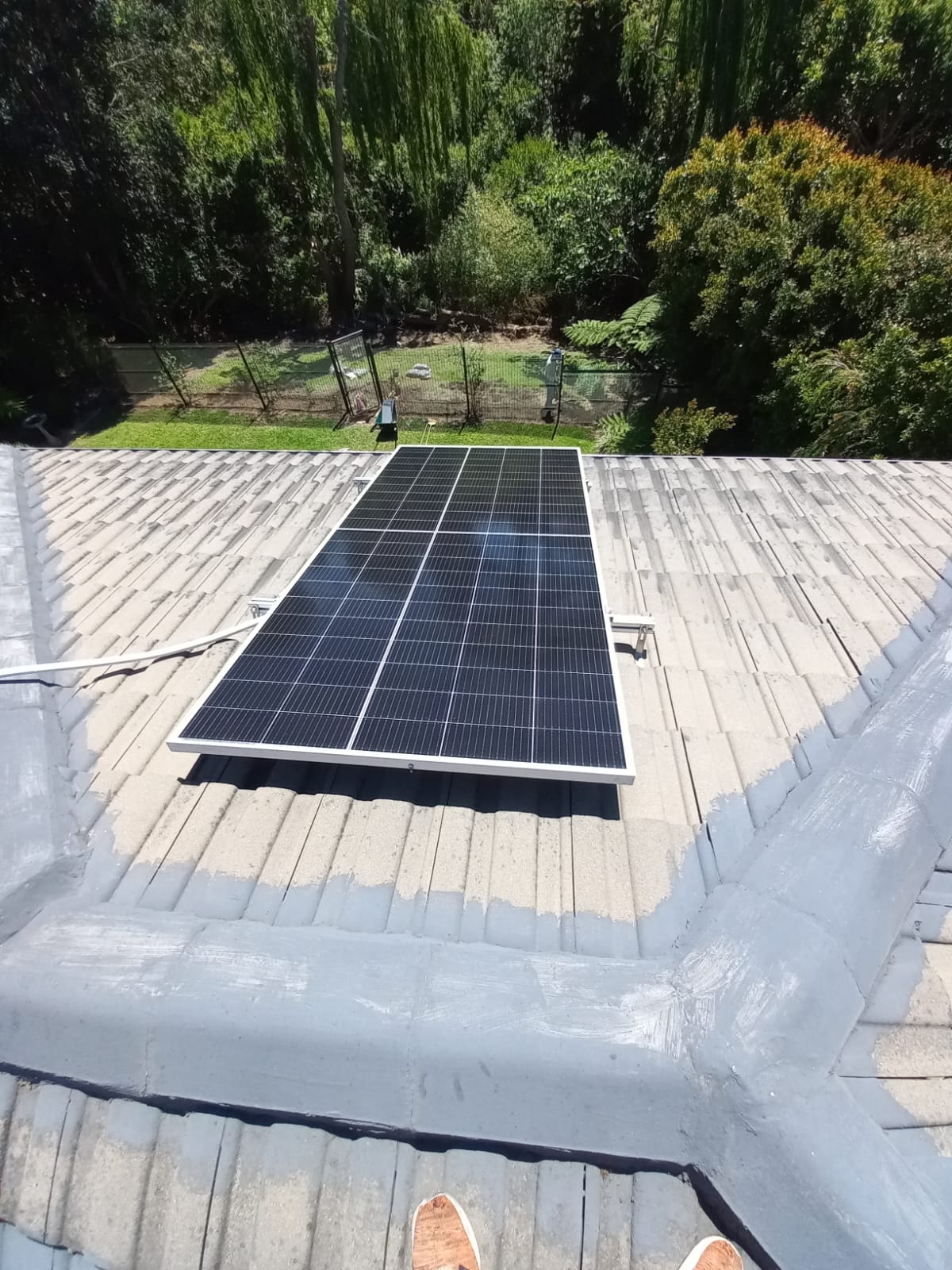
Sunflow can assess ordinary surface dirt on suitable solar panels in Brummeria, Pretoria. If you see scattered specks on the glass after nearby painting, tell us whether the affected panels sit beside the wall or roof edge that was painted. A routine wash is for removable dirt. Suspected paint droplets or material stuck to the glass should be checked with the painter and solar installer before that part is included.
Make a record while the builder or painter still knows the work
Tell us when the paintwork took place and where it was in relation to the panels. A safe, wide ground-level photo shows where the array and the painted surface sit. If you know which side was worked on or the type of coating applied, note it. The person responsible for the paint may have useful information. A picture from below is unlikely to tell us the chemical composition or prove anything has bonded to the glass. Do not use a ladder or try a solvent to check.
For example, the end row beside freshly painted trim may have a few sharp spots while the rest of the array has a light dusty film. Ask about a routine clean for the dusty group and mark the spots “check first”. Give the information to the painter and installer before booking treatment for those panels. If the two areas overlie the same work position and cannot be separated, the routine clean may have to wait.
Know which cleaning methods are in scope
On suitable solar panels, we use controlled water and a non-abrasive brush and do not walk on the glass. This is not paint removal by scraping, using a solvent or applying more pressure. We assess existing damage, roof access and equipment condition before agreeing work. A damaged panel, loose cable or new inverter warning should be referred to an appropriate professional. Mention anything known without touching electrical parts.
If paintwork is still underway nearby, tell us when the activity is expected to end and whether the painter needs the same access. Do not assume that scaffolding set up by another trade can be used for a cleaning visit. We may need to wait or change the requested scope. A surface clean does not test the electrical installation or guarantee better panel output.
Separate the related requests
- Solar panel cleaning. For suitable solar glass with ordinary dirt, give the approximate count and affected rows. Flag suspected paint spots and keep them outside the starting scope.
- Roof cleaning. If light deposits are on a separate sound pitched roof section, ask about it as its own surface. Roof washing does not strip paint or require removing panels.
- Exterior soft washing. If ordinary dirt remains on another suitable exterior wall, show the old and new paint boundaries. Let the painter confirm any fresh coating is ready. A wall wash does not fix issues with recent paint application.
Questions about marks after paintwork
Can you tell whether the specks are paint?
Not from a photograph alone. Ask the person responsible for the work what material was used and show the installer the affected area. Avoid testing the surface yourself. If the marks are unclear, flag them as suspected rather than confirming a cause.
Can the rest of the panel array still be cleaned?
We can assess unaffected or ordinarily dirty sections separately if it is possible to reach them without treating the excluded spots. Mark the groups clearly and tell us if the unknown material might extend farther.
Do I need a generation reading to request a clean?
No. The appearance and condition of the panels and the available access are more useful for a surface-cleaning enquiry. If the inverter is showing a warning or the system’s output changed unexpectedly, ask the installer rather than expecting cleaning to diagnose it.
Ask about solar panel cleaning in Brummeria. Have the exact suburb, date and location of nearby paintwork, approximate panel count and a safe view of the affected and unaffected rows. If possible, note who can confirm the material used.