
The short answer
There is no single safe method for every roof. Start with the roof covering, its condition, coating, pitch and the type of build-up. A low-pressure treatment or careful manual removal may suit one roof; controlled water pressure may suit another robust surface only when its manufacturer and condition allow it. An aggressive jet is not a default roof-cleaning method.
Key takeaways
- Identify the roof material and any damaged or loose areas before choosing a method.
- Soft washing is a method, not a promise that every chemical suits every roof.
- Pressure, nozzle, distance and water direction matter where controlled washing is appropriate.
- Cleaning improves appearance but does not repair leaks, broken tiles or failed waterproofing.
What does soft washing mean for a roof?
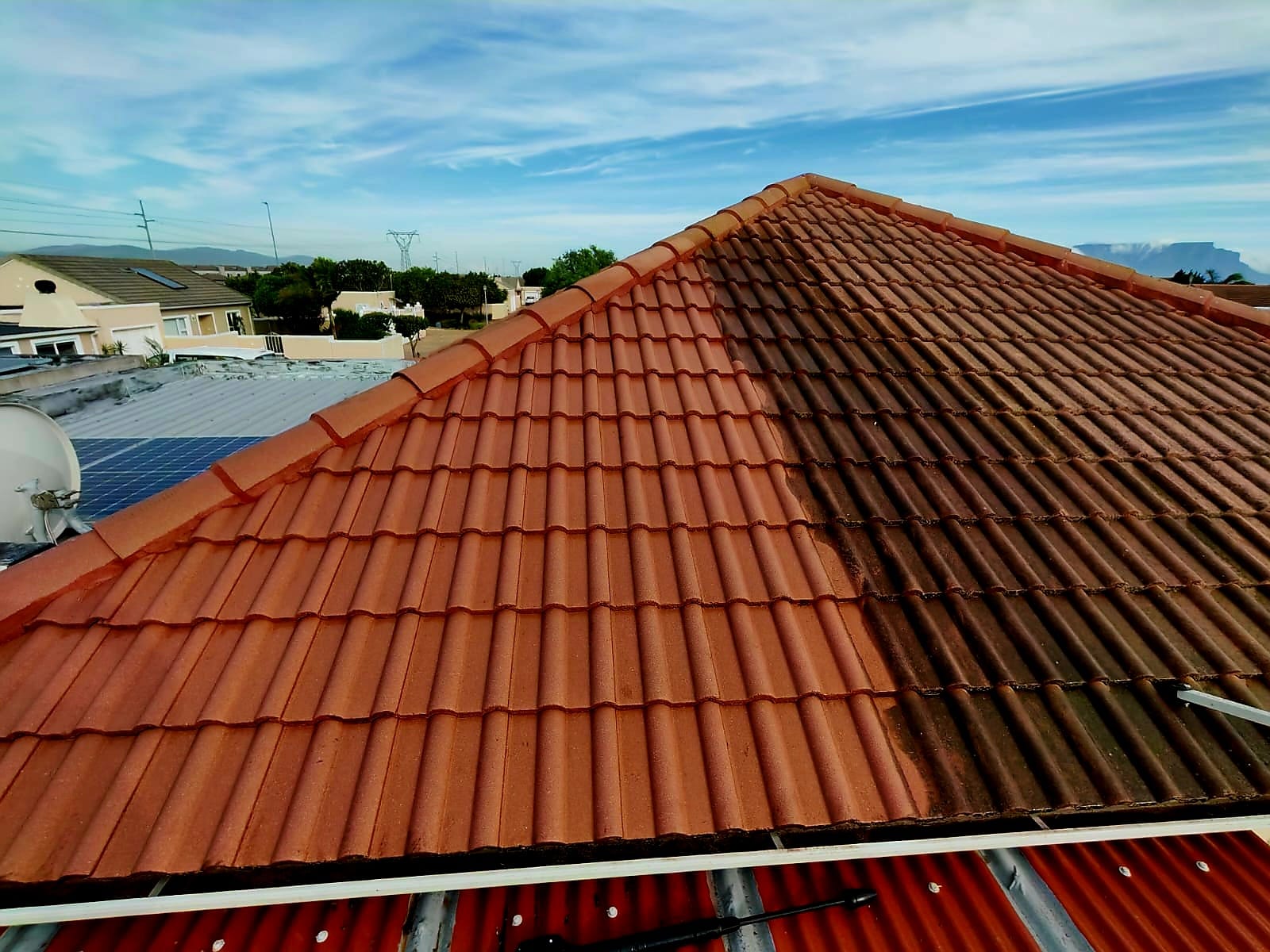
Usually it means applying a cleaning treatment suited to the roof with relatively low water pressure, allowing time for the product to work, then rinsing or letting it weather as specified. The product must be suitable for the roof covering and nearby plants, gutters, tanks and runoff route. It is not a licence to spray a strong chemical over every roof.
When is controlled pressure worth considering?
Some sound, suitable roof surfaces can be cleaned with carefully controlled water pressure, working distance and direction. That does not mean blasting at maximum pressure. Water driven under overlaps, loosened coatings and damaged tiles can create a much bigger problem than the original dirt. Clay and concrete tile manufacturers warn that high-pressure jets can damage tiles or force water beneath them, so their guidance and the actual roof condition come first.
What about moss, lichen and fragile tiles?
Moss and lichen can grip a surface firmly. A delicate, weathered or loose covering may need a different approach, including careful removal or a suitable treatment, or may need a roofer's advice before cleaning. A visible patch of growth alone does not prove the roof is leaking. If tiles, flashings or ridge details look unsound, repairs should be considered separately rather than hidden by a wash.
Is this a cleaning visit or preparation for repainting?
Tell us which result you want before the work is quoted. A cleaning-only visit addresses the agreed dirt or growth; it does not repair a failing coating or promise a newly painted finish. If paint is peeling or chalking, or metal shows rust, that changes what needs assessing before a method is selected. Repainting needs a suitable, sound base and preparation matched to the roof and chosen coating system—not simply more water pressure. Send any existing paint details you know, along with photographs taken from the ground or another safe position; do not climb onto the roof to investigate. For suitable pitched roofs, roof painting is assessed and quoted separately. Repairs and leak diagnosis are separate from cleaning or painting.
How Sunflow decides what to quote
Send wide photographs of each roof face plus close-ups of the build-up, and tell us the suburb, storeys and any known leaks or fragile sections. We check the material, condition, access and what sits below the roof, then explain the proposed cleaning method and realistic result. We collect the dislodged debris rather than leaving the clean-up to you. If the roof needs a roofing specialist first, we will say so.
What will it cost, and what is excluded?
Sunflow roof cleaning starts at R3,900; for larger roofs, R50 per m² is a useful planning guide once it exceeds that minimum. Size, method, access and clean-up affect the confirmed quote. Cleaning does not include roof repairs, leak diagnosis, waterproofing, repainting or a guarantee that an aged coating will look new.
Sources and further reading
How Sunflow can help
Send roof photos, your suburb and the number of storeys. We can explain which cleaning approach suits the roof and confirm the price before booking.
Get a professional roof cleaning quote →
WhatsApp photos for a professional roof cleaning quote →
Read about professional roof cleaning →