
The short answer
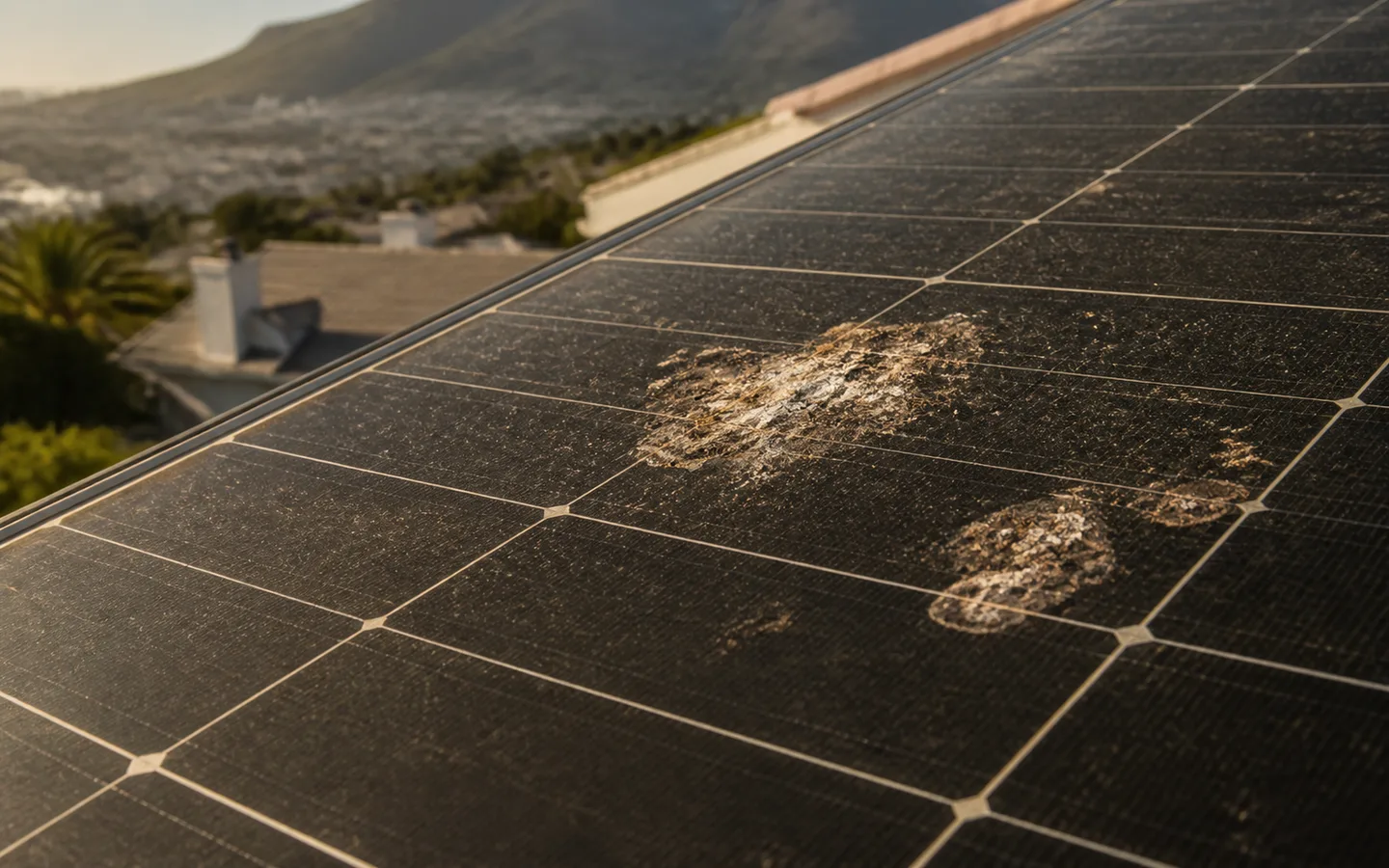
Bird droppings create concentrated shade on part of a panel and can bake onto warm glass. The production effect varies by array design and the position of the fouling, but prompt, non-abrasive removal is preferable to scraping or waiting for rain to solve it.
Key takeaways
- Bird fouling is more concentrated than an even dusty film.
- Sun and heat can make deposits harder to remove.
- Rain may soften fouling without removing it completely.
- Persistent output concerns require an installer, not repeated cleaning.
Why a small patch can matter
An even layer of dust spreads across a broad area, while bird mess can block light in one concentrated position. How the system responds depends on cell layout, string configuration and whether the array uses optimisers or microinverters.
Why waiting can make removal harder
Cape Town panels can become hot during clear weather. Organic material that remains on warm glass may dry and bond more firmly. Rain can soften the edges or spread residue but may leave the central deposit behind.
Safe removal matters
Scraping, abrasive pads and harsh household chemicals can introduce new problems. Sunflow uses controlled water through a purpose-built Kärcher solar-cleaning lance and non-abrasive brush. We do not aim an exposed high-pressure jet at the glass or walk on panels.
Reduce repeated fouling responsibly
Regular ground-level observation helps identify repeat problem areas. Nearby perches, nesting activity and overhanging branches may contribute, but any deterrent or vegetation work should be handled lawfully and without interfering with protected wildlife or electrical equipment.
How Sunflow can help
Sunflow helps Cape Town homeowners and property managers keep solar panels, gutters, roofs, paving and exterior walls clean and well maintained. Send us a few photos and we’ll recommend the right next step.
Read about professional solar-panel cleaning →